
Address: No. 90 Huadong Road, High tech Zone, Qingdao City, Shandong Province, China
E-mail: sainsgas@sainsgas.com
Tel: 18563963366

In semiconductor, precision manufacturing and new material production, a stable and safe gas supply system underpins production yield and protects against major safety incidents. A gas source interruption, a pipeline leak or a purity fluctuation can stop production lines, scrap products and even trigger safety accidents. A complete gas supply safety solution has to be built across four dimensions at the same time: source redundancy, delivery piping, monitoring and interlocks, and operations management.
1. Redundant Gas Sources: The First Line of Defense
For both bulk gases and electronic specialty gases, automatic manifold switching systems allow seamless changeover between the working source and the standby source, so gas supply is never interrupted during cylinder changes or equipment maintenance.
Adopt a multi-source hedging strategy as well: pair long-term contract supply with qualified backup channels, and plan inventory in advance based on actual consumption data, so that market shortages or overseas supply restrictions do not translate into line stoppages. Hazardous specialty gases should be stored in dedicated segregated areas, arranged according to their physical and chemical properties to prevent incompatible gases from coming into contact.
2. High-Purity Delivery Piping: The Core Carrier of Safe Transfer
Select tubing suited to high-purity service and apply orbital automatic welding to minimize leak paths at joints. For corrosive and pyrophoric gases, use double-jacketed piping with continuous interlayer monitoring, so even a trace leak immediately triggers an alarm.
After installation, perform segmented purge and displacement, hold-pressure testing and helium mass spectrometry leak detection, and retain full acceptance records to confirm both tightness and gas cleanliness. Route different gas lines separately and set up independent distribution units to avoid cross-contamination.
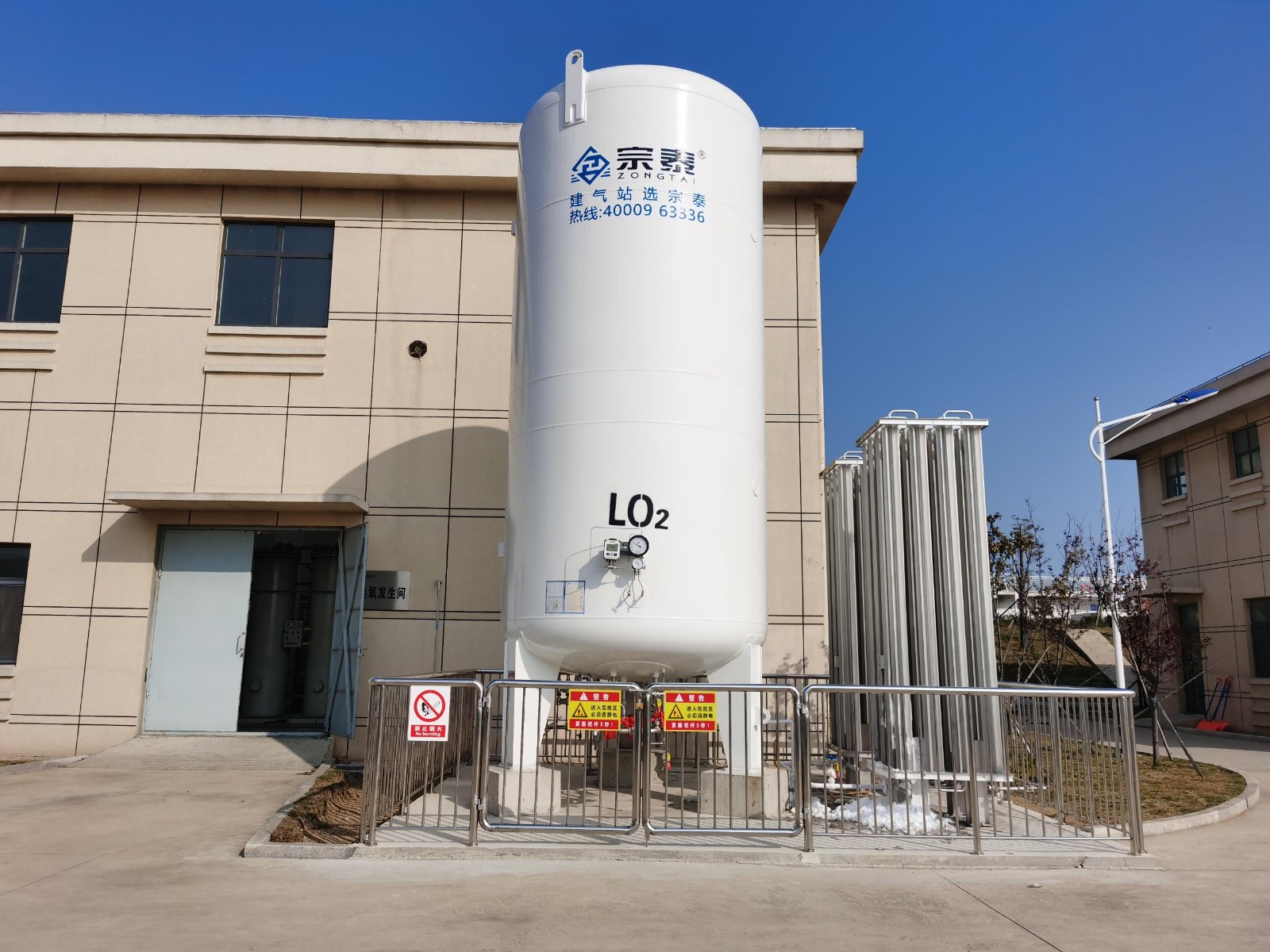
3. Smart Monitoring and Emergency Interlocks: Warning Before Failure
Install gas detection devices at storage areas, gas cabinets and pipeline nodes, backed by forced ventilation. When the system detects excessive concentration, overpressure or abnormal negative pressure, it automatically triggers audible and visual alarms, shuts off the gas source and starts ventilation, while pushing alarm data to the central control platform. Equip exhaust abatement units to treat discharged gas safely and comply with environmental and safety regulations.
4. Standardized Operations and Emergency Management
Establish scheduled inspection, periodic leak detection and safety valve calibration plans, together with complete equipment records. Train on-site operators on gas properties, daily procedures and response actions for leaks or supply interruptions, and maintain dedicated emergency response plans.
5. Turnkey Gas Supply Safety Service
We deliver integrated gas supply safety solutions covering bulk gas station planning, backup supply system construction, high-purity gas piping installation, safety monitoring equipment and ongoing inspection and maintenance — building a reliable, compliant and continuous gas assurance system for precision manufacturers.
Address: No. 90 Huadong Road, High tech Zone, Qingdao City, Shandong Province, China
E-mail: sainsgas@sainsgas.com
Tel: 18563963366
Copyright © 2024 Qingdao SAINS Gas Technology Co., Ltd. All Rights Reserved. Powered by HiCheng
