
Address: No. 90 Huadong Road, High tech Zone, Qingdao City, Shandong Province, China
E-mail: sainsgas@sainsgas.com
Tel: 18563963366

Bundled helium prices in China trended downward in late October, with both imported and domestically produced high-purity helium quotes softening. The panic over tight supply has eased for many downstream manufacturers. However, industry insiders agree that this downward adjustment is only temporary. The fundamental fragility of the global helium supply chain remains unchanged. Semiconductor, fiber optic and precision testing factories must not relax their risk controls just because spot prices have fallen.
Helium is a rare byproduct of natural gas and cannot be artificially synthesized. Global helium resources are highly concentrated. Two major risks continue to trouble end users. First, Russia's helium export restrictions will remain in place until 2027. Exports to countries outside the EAEU require special approval, making supply highly unpredictable. Second, Qatar, one of the world's top helium producers, faces persistent geopolitical disturbances. Its production recovery is slower than expected. Nearly 40% of global helium capacity is exposed to instability. Once overseas supply is interrupted by shutdowns, approval delays or logistics issues, helium spot prices can spike rapidly and halt high-end production lines.
Helium has unique thermal conductivity and molecular permeability that are hard to replace for critical processes. It is widely used for EUV supporting cooling, leak testing, optical fiber drawing, superconducting equipment and precision inspection. There are no perfect equivalent substitutes for many core processes. Unexpected helium shortage will trigger production shutdowns and order losses, which cost far more than gasprocurement expenses.
Facing the current market condition of falling prices but lingering risks, we have sorted out three practical supply security strategies for chip, fiber and testing facilities.
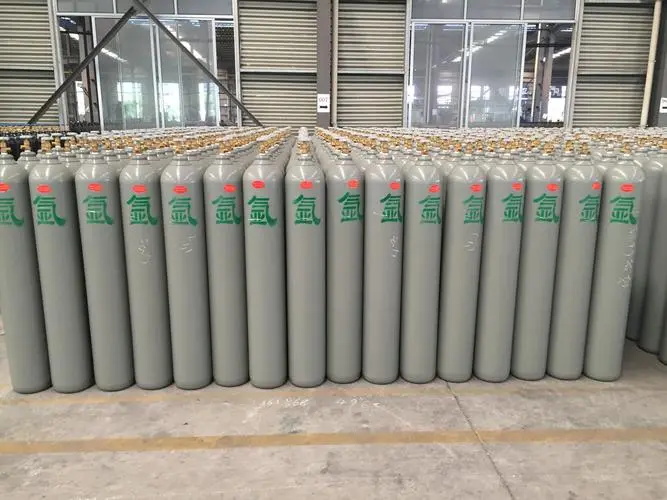
1. Install Helium Recovery Systems to Cut Consumption and Dependence
Given the high cost of helium, helium recovery and purification units have become standard equipment for leading wafer and fiber factories. For helium exhaust from fiber drawing and leak detection stations, waste helium can be collected by vacuum, filtered, dehydrated, deoxygenated and repurposed after multi-stage purification. Well-designed systems can reach over 90% recovery rate. It greatly reduces purchased helium consumption and stabilizes gas cost regardless of market fluctuations.
2. Graded Gas Substitution to Reduce Helium Consumption on Non-critical Stations
Avoid using high-purity helium for all processes. Conduct process grading assessment: keep high-purity helium for core steps including EUV processes and high-precision leak testing, and evaluate helium-argon mixture or high-purity nitrogen substitution for non-critical purging and shielding applications. Fiber manufacturers commonly adopt helium-argon blending to cut helium proportion while meeting process requirements. Any substitution upgrade needs a precise gas mixing system and pre-production verification to prevent yield loss.
3. Build Multi-source Hedging Framework with Safety Stock Plan
Relying solely on imported helium carries extreme risks. The recommended portfolio combines imported bundled helium, domestically extracted helium and long-term supply agreements.
• Source domestic helium from LNG-BOG helium extraction projects as a backup supply;
• Sign long-term contracts with reliable gas suppliers to lock allocation volumes and pricing rules against spot price surges;
• Calculate proper safety stock based on consumption rate, set inventory warning thresholds and manage cylinder and tube trailer rotation;
• Agree on emergency supply protocols with your gas partner to prioritize core production lines during shortage crises.
Address: No. 90 Huadong Road, High tech Zone, Qingdao City, Shandong Province, China
E-mail: sainsgas@sainsgas.com
Tel: 18563963366
Copyright © 2024 Qingdao SAINS Gas Technology Co., Ltd. All Rights Reserved. Powered by HiCheng
