
Address: No. 90 Huadong Road, High tech Zone, Qingdao City, Shandong Province, China
E-mail: sainsgas@sainsgas.com
Tel: 18563963366

Nitrogen is widely used in industrial applications such as lithium-battery material heat treatment, metal processing, controlled-atmosphere grain storage and chemical inerting. When planning a gas supply system, most manufacturers face a core decision: should we buy liquid nitrogen delivered by cryogenic tanker, or invest in on-site nitrogen generation equipment?
Many companies compare only the unit price of liquid nitrogen and overlook hidden costs such as tank boil-off loss, freight, equipment depreciation and safety management. This article compares purchased liquid nitrogen and on-site generation across system features, cost structure and suitable scenarios, providing a practical reference for gas supply system selection.
1. Two Nitrogen Supply Solutions
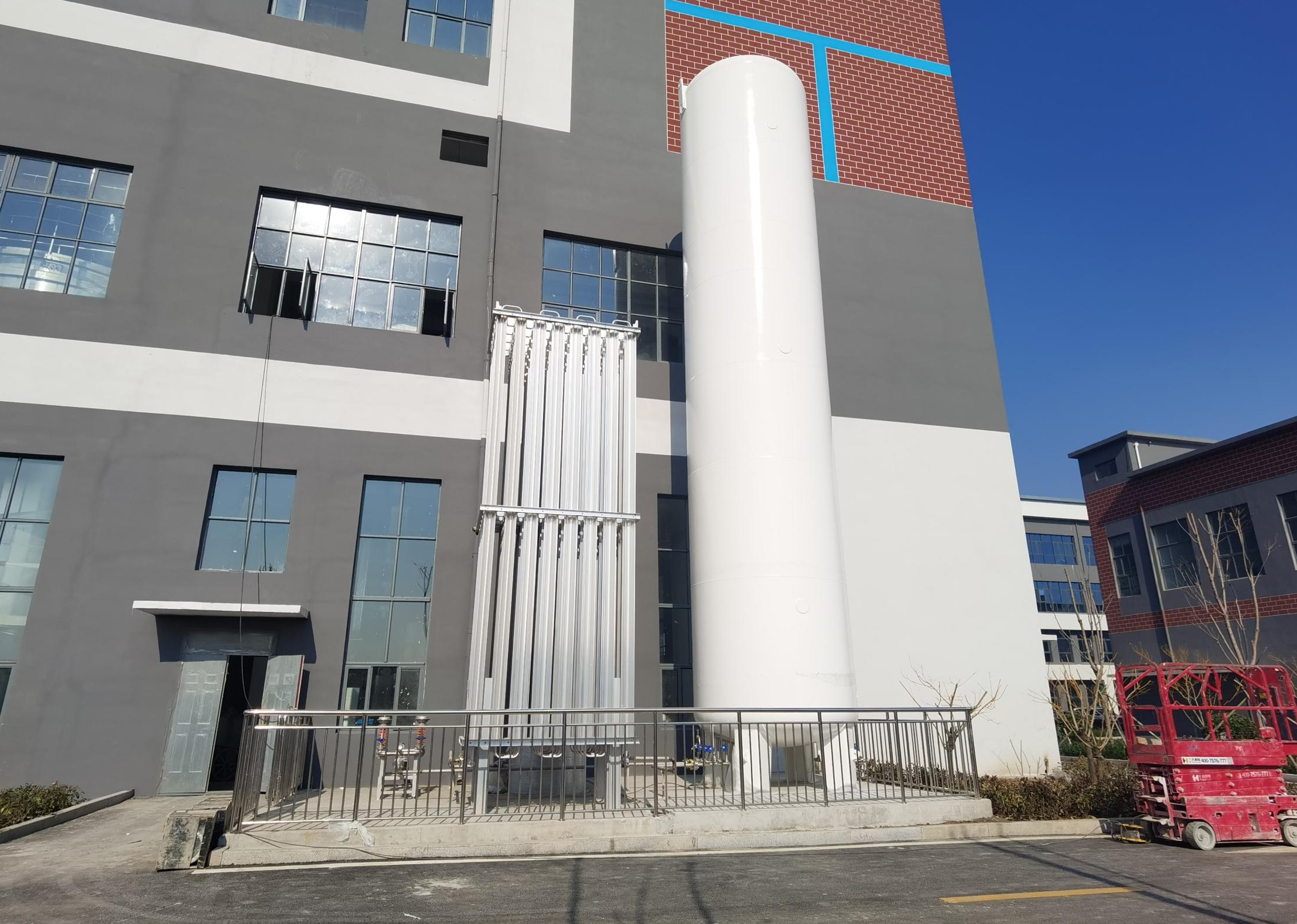
Bulk Liquid Nitrogen (Cryogenic Tanker Supply)
With this mode, the gas supplier delivers liquid nitrogen to the plant by cryogenic tanker. The liquid is stored in a low-temperature storage tank and vaporized before entering the plant pipe network.
Advantages
Low initial capital investment; tanks can be leased, deployment is fast and production can start quickly.
Strong supply flexibility; purchase volume can be adjusted according to production load, suitable for intermittent operations.
Low routine maintenance burden; liquid nitrogen delivery is handled by the supplier.
Limitations
Continuous natural boil-off loss from the cryogenic tank, which occurs even when production is stopped.
Total cost includes product price, freight and tank rental; prices tend to rise during supply-tight periods.
Supply is affected by road transport, severe weather and regional air-separation capacity, creating a risk of supply interruption.
Pressure vessels require regular inspection, and unloading operations carry cryogenic-burn safety risks.
Suitable for: monthly liquid nitrogen consumption below 30 tonnes, pilot projects, short-term projects, intermittent production, or plants with limited space for on-site nitrogen units.
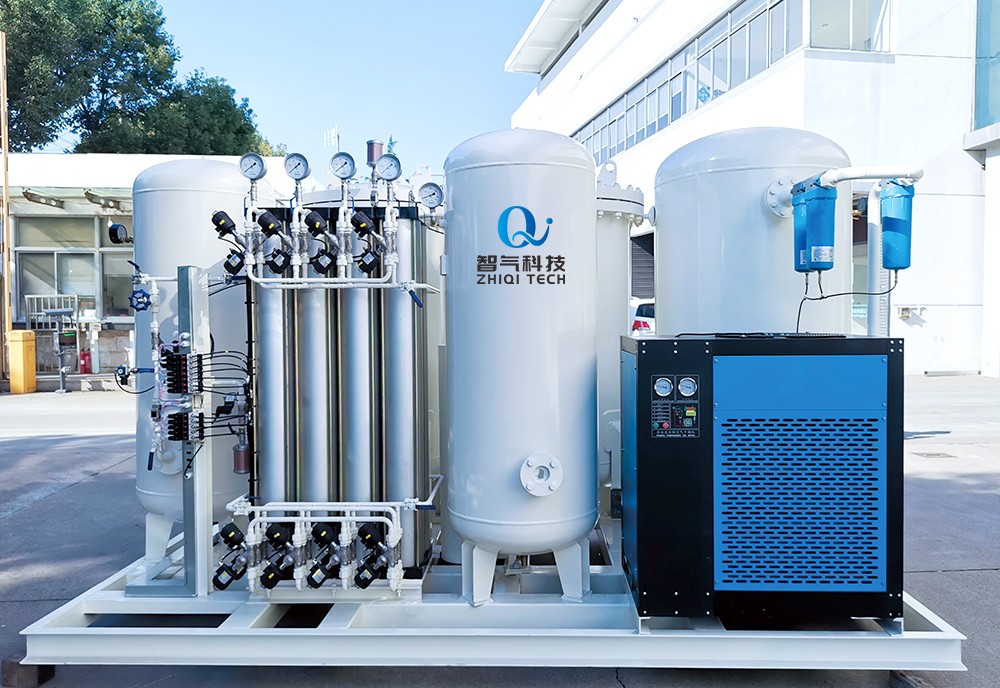
On-Site Nitrogen Generation
On-site generation uses compressed air as feedstock. Through Pressure Swing Adsorption (PSA) or membrane separation technology, nitrogen is produced directly at the plant and delivered to the production line.
Advantages
Significant long-term operating cost advantage; freight and boil-off loss are eliminated. In stable continuous production, total gas cost can drop by 30%–50%, and most projects recover equipment investment within 1–2 years.
Supply is self-controlled and unaffected by external gas source fluctuations.
No large-volume cryogenic liquid nitrogen storage, reducing pressure-vessel compliance risk.
Limitations
Higher one-time equipment investment; floor space is required for the compressor, nitrogen generator and gas-treatment system.
Regular maintenance is needed, including filter and consumable replacement.
If ultra-high-purity nitrogen above 99.999% is required, equipment investment increases accordingly.
Suitable for: monthly liquid nitrogen consumption of 50 tonnes or above, year-round continuous production, and long-term stable projects such as lithium battery, photovoltaic, grain storage and heat treatment.
2. Cost Analysis and Break-Even Point
Industry reference: a monthly liquid nitrogen consumption of 30–50 tonnes is the break-even range between purchased liquid nitrogen and on-site generation.
Below 30 tonnes/month: purchased liquid nitrogen has better total cost.
Above 50 tonnes/month: on-site generation delivers superior long-term economics.
In the 30–50 tonne range: conduct a full life-cycle cost assessment. The farther the plant is from the air-separation facility, the higher the liquid nitrogen freight, making on-site generation more attractive.
3. Hybrid Supply: Solving Load Fluctuation
For plants with significant load fluctuation, a hybrid solution combining on-site generation as the primary source with liquid nitrogen storage as backup peak-shaving is recommended. Daily production relies on the on-site nitrogen unit to control long-term gas cost, while the liquid nitrogen tank serves as an emergency source during peak periods and equipment maintenance, balancing economy and reliability and avoiding production-line shutdown from gas shortage.
4. Key Selection Considerations
Configure nitrogen purity according to actual process requirements; avoid specifying unnecessarily high purity, which wastes energy and equipment investment.Pay attention to compressor energy consumption in on-site systems; electricity is the main operating cost, so choose energy-efficient units.Companies relying on purchased liquid nitrogen can sign annual supply contracts to hedge against regional price fluctuation.Whatever solution is chosen, an emergency gas supply plan should be established to ensure continuous production.
Address: No. 90 Huadong Road, High tech Zone, Qingdao City, Shandong Province, China
E-mail: sainsgas@sainsgas.com
Tel: 18563963366
Copyright © 2024 Qingdao SAINS Gas Technology Co., Ltd. All Rights Reserved. Powered by HiCheng
