
Address: No. 90 Huadong Road, High tech Zone, Qingdao City, Shandong Province, China
E-mail: sainsgas@sainsgas.com
Tel: 18563963366

As the winter heating season kicks off in northern regions, priority energy allocation for residential heating creates seasonal volatility for bulk industrial gas markets. Air separation units are high-energy-consumption facilities. Coupled with freezing temperatures, restricted transport of hazardous chemical tankers, and scheduled maintenance or load reduction of supporting chemical plants, regional supply and demand of liquid oxygen, liquid nitrogen, liquid argon and carbon dioxide are shifting. Manufacturers in lithium battery, welding, metallurgy, new materials and food processing sectors need to prepare for price and supply volatility, as well as winter freeze protection and leak prevention for cryogenic gas equipment.
1. How the Winter Heating Season Impacts the Industrial Gas Market
Liquid Argon (LAR): Highest Supply Contraction Risk, Prone to Price Surge
Liquid argon is a by-product of air separation units, tied closely to steel mills and chemical ASU operations. During heating season, many chemical plants cut operating load to secure residential energy supply, lowering ASU utilization and reducing commercial LAR supply. Meanwhile, welding and stainless steel production usually ramp up before year-end, easily triggering local shortage and sharp spot price hikes. Liquid argon has a limited transportation radius, and cross-regional transfer raises costs significantly. Once local production drops, procurement pressure rises rapidly.
Liquid Nitrogen (LIN): Overall Sufficient Supply with Local Short-term Outages
National liquid nitrogen capacity is adequate; a nationwide gas shortage is unlikely. However, low temperatures reduce heat exchange efficiency of air separation equipment and lower liquid output per unit. Snowstorms and road closures in northern areas delay tanker deliveries, leaving some factories facing late shipments. For stable high-consumption users, relying solely on tanker delivery increases the risk of supply interruption in winter.
Liquid Oxygen (LOX): Obvious Regional Divergence, Demand Linked to Steel Operation
The major LOX downstream segment is steel cutting and smelting. Some steel mills implement staggered production in heating season, weakening local LOX demand. Other metallurgy and chemical sites maintain high operating rates; combined with logistics delays, this creates a split market where some regions have abundant stock while others struggle with supply. As a strong oxidizer, liquid oxygen requires strict safety inspection for outdoor tanks and pipelines in winter.
Carbon Dioxide (CO₂): Stable Supply, Slightly Rising Dry Ice Demand
Most CO₂ is recovered from chemical tail gas, with steady output through heating season. Demand for dry ice in cold chain and food preservation increases moderately, so price fluctuation is mild. Main risks lie in cryogenic transportation and tank freeze protection.
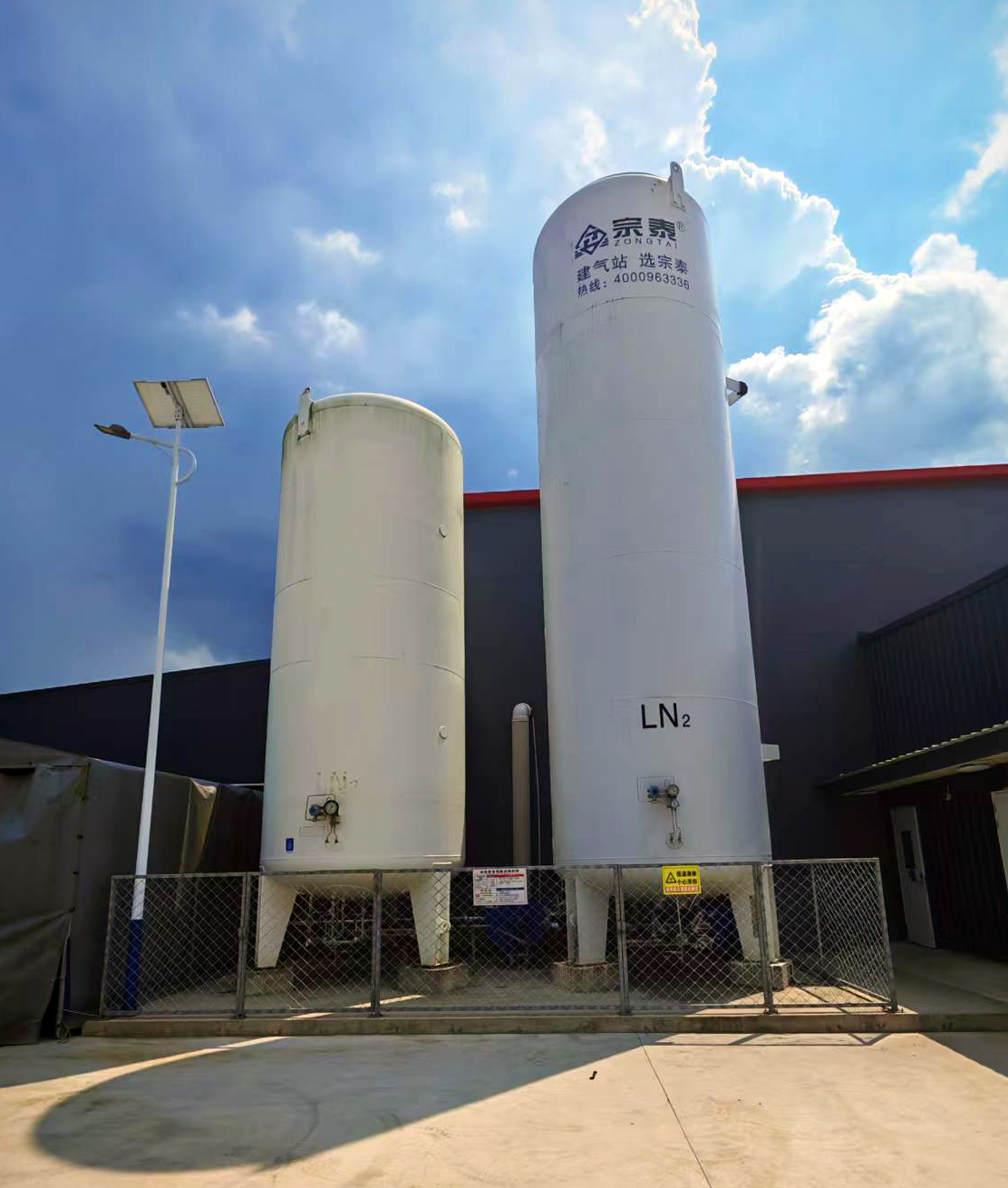
2. Key Winter Safety Hazards for Cryogenic Gas Systems
Cryogenic storage tanks, valves and pipelines are vulnerable to freeze blockage, vacuum loss and abnormal pressure in cold weather, and are common causes of on-site incidents:
• Excessive frost on tank shell and pipelines: Persistent heavy frost signals insulation vacuum failure, accelerating LIN/LOX evaporation loss and abnormal pressure build-up, requiring immediate inspection and repair.
• Frozen water trapped in valves, drain lines and pressure gauge impulse tubes: Valves may jam, pressure readings become inaccurate, and safety relief valves fail to open, creating overpressure hazards.
• Thermal contraction of outdoor pipelines under low temperature: Flanges and joints tend to develop micro leaks. Ice formed by spilled cryogenic liquid can hide leak points and make detection harder.
• Higher risks during tanker loading/unloading in rain and snow: Hoses become brittle at low temperature. Control flow rate strictly and protect workers from cryogenic burns.
Winter Inspection Checklist:
• Periodically calibrate safety relief valves, pressure gauges and level gauges;
• Check heat tracing and insulation of pipelines, drain residual water to avoid freeze blockage;
• Track daily evaporation rate of tanks. Investigate abnormal frosting and continuous pressure rise promptly;
• Keep drainage of tank bunds unobstructed to prevent ponding and ice formation;
• Train staff on emergency response for cryogenic leaks and cold burns.
3. How Factories Select Gas Supply Solutions amid Unstable Winter Supply
• Small and medium consumption plants: Sign winter supply contracts with suppliers to lock base volume and reserve alternative sourcing channels. Avoid fully depending on spot market orders to prevent shutdowns caused by snow-blocked roads.
• High-flow continuous production plants (Li-ion battery, new materials, chemical): Evaluate PSA on-site nitrogen generation. On-site gas production is immune to tanker logistics and volatile spot nitrogen prices, delivering stable nitrogen year-round. A hybrid solution of on-site nitrogen generator plus liquid nitrogen backup tank is widely adopted to mitigate winter outage risks.
• Heavy LAR consumers (welding, metal fabrication): Lock in long-term supply frameworks in advance and optimize tank inventory. Large-volume production lines may consider dedicated air separation solutions to hedge against LAR price spikes.
4. Procurement and Operation Recommendations
• Confirm winter transport capacity and contingency plans with gas suppliers, and prepare backup vendors;
• Increase inspection frequency. Add freeze and leak checks of cryogenic tanks and safety accessories to daily SOPs;
• When designing gas supply systems for new plants, calculate based on cold winter conditions and winter traffic limits instead of only ambient temperature scenarios;
• Develop gas supply interruption emergency plans to safely shut down production or switch backup gas sources when tankers cannot arrive on time.
Address: No. 90 Huadong Road, High tech Zone, Qingdao City, Shandong Province, China
E-mail: sainsgas@sainsgas.com
Tel: 18563963366
Copyright © 2024 Qingdao SAINS Gas Technology Co., Ltd. All Rights Reserved. Powered by HiCheng
